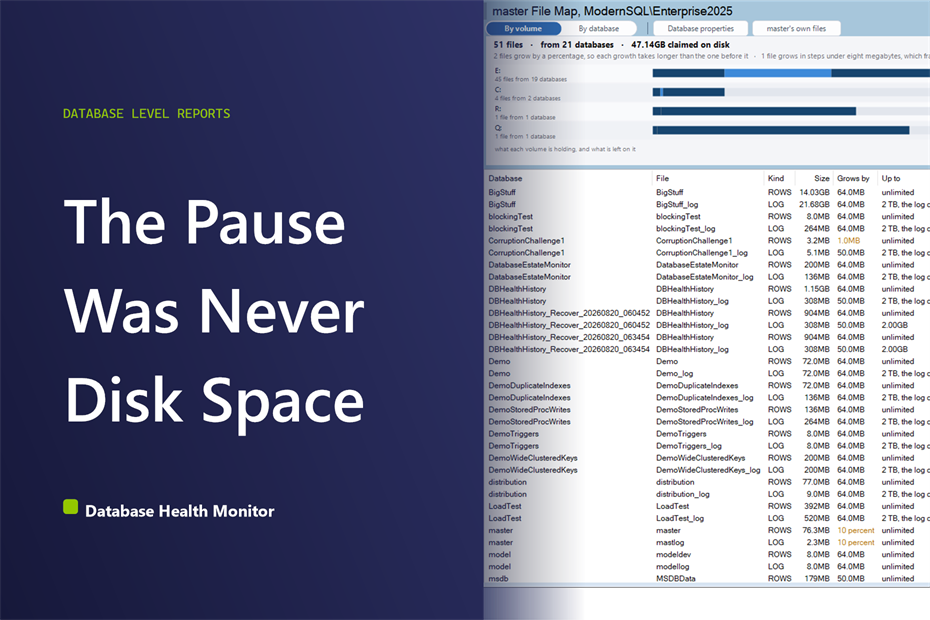
Why Autogrowth in Percent Slows SQL Server Down
Autogrowth in percent compounds: every growth event takes longer than the last. Here’s how to spot it and fix it before it slows down SQL Server.
Autogrowth in percent compounds: every growth event takes longer than the last. Here’s how to spot it and fix it before it slows down SQL Server.
SQL Server technical debt turns messy T-SQL into a weighted score and a cost estimate, so you know which procedure to fix first.

A wide clustered index gets copied into every nonclustered index on the table – here is how to find the ones actually costing you.
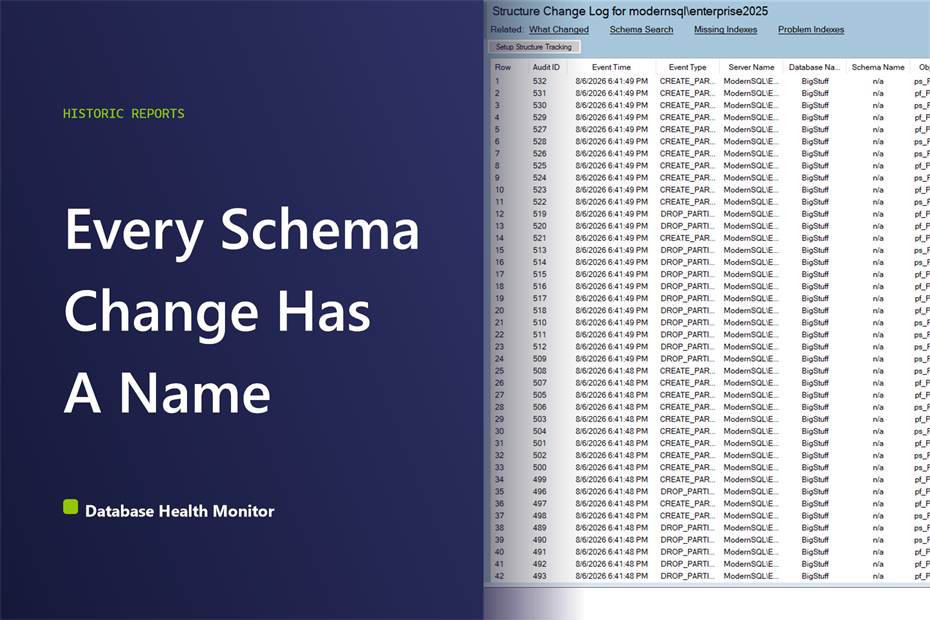
See who changed the schema in SQL Server: the exact statement, login, host and application, captured by a DDL trigger you switch on per database.
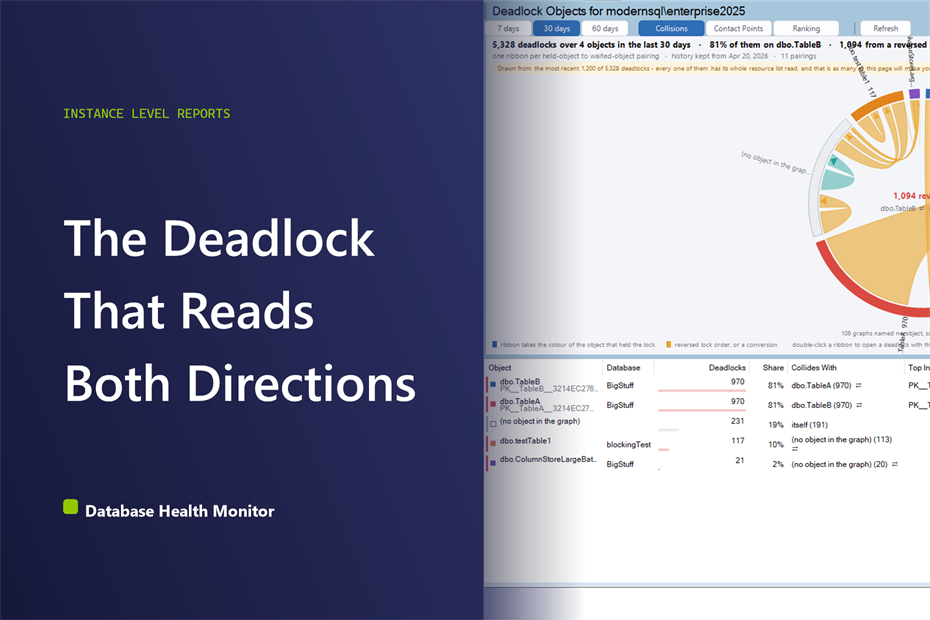
See which SQL Server deadlock objects collide with each other, on what index, under what lock mode, and which one loses every time.
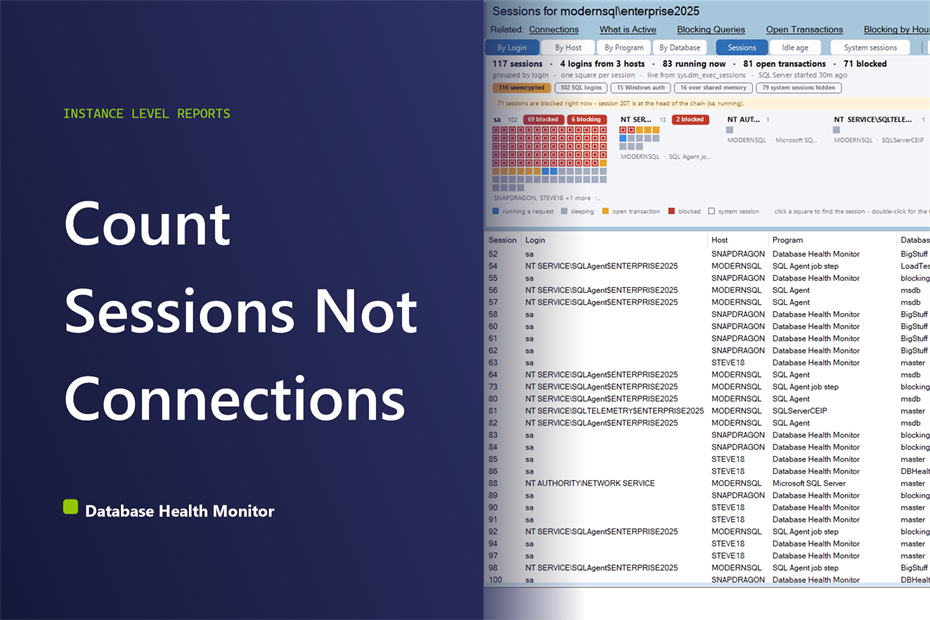
See who is connected to SQL Server right now, colored by state, so you can tell a connection leak from normal pooling before resizing anything.
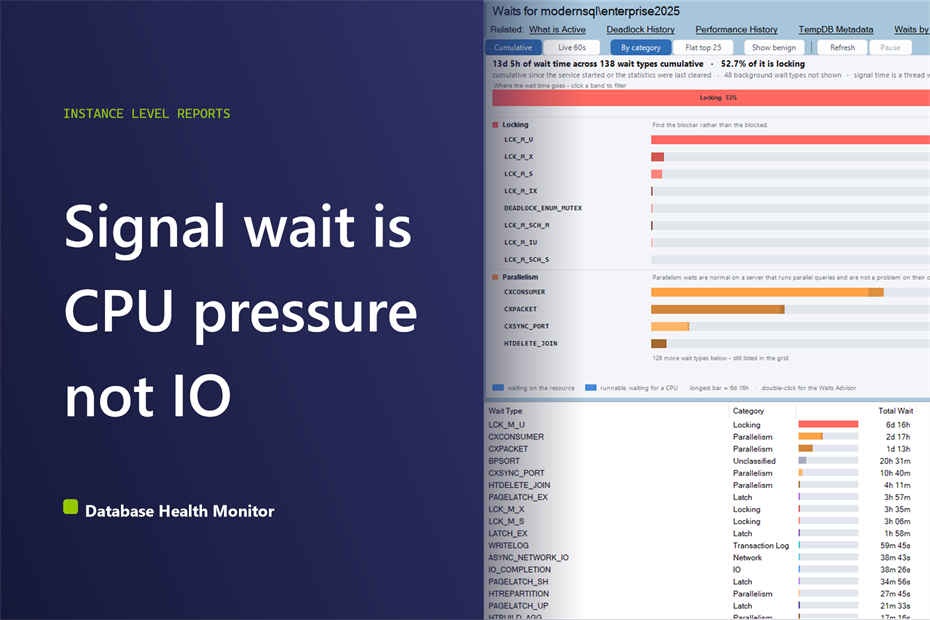
Learn what signal wait time means in SQL Server wait statistics, why it signals CPU pressure, and how to read it before blaming the disk.
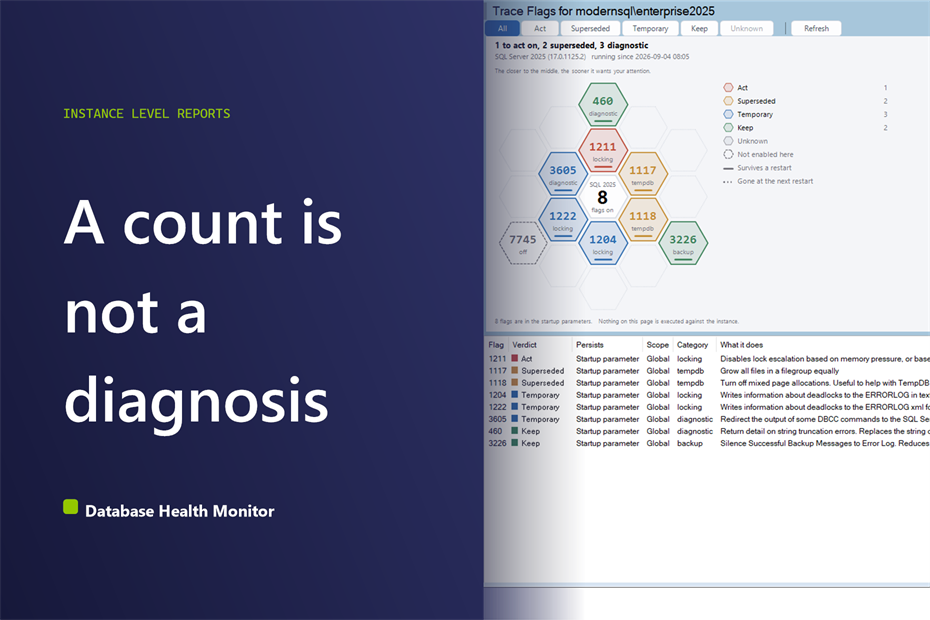
See which SQL Server trace flags on an instance are still doing anything on the current build, and which ones vanish at the next restart.
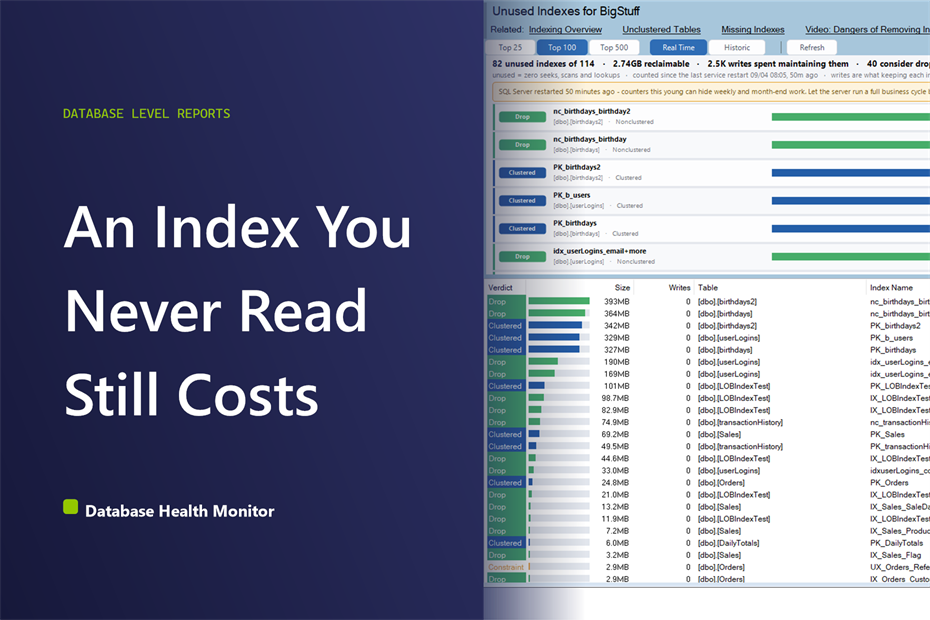
Find SQL Server unused indexes with sys.dm_db_index_usage_stats, see the write cost of keeping them, and get a verdict on every row.

When querying data in SQL Server, selecting the right join type can dramatically shape both the results and efficiency of your queries. Full Joins and Cross Joins stand out as two options that frequently lead to mix-ups, given how differently they handle data from multiple tables. A Full Join pulls every record from both tables involved, inserting NULLs wherever no match exists on the join condition. By contrast, a Cross Join creates every possible pairing of rows between the tables, …
SQL Server Full Join vs Cross Join: Key Differences Explained Read more →
We are ready to help. Steve and the team at Stedman Solutions are here to help with your SQL Server needs. Get help today by contacting Stedman Solutions through the free 30 minute consultation form.
Contact Info for
Stedman Solutions, LLC.
PO Box 3175, Ferndale WA 98248,
Phone: (360)610-7833
Our Privacy Policy