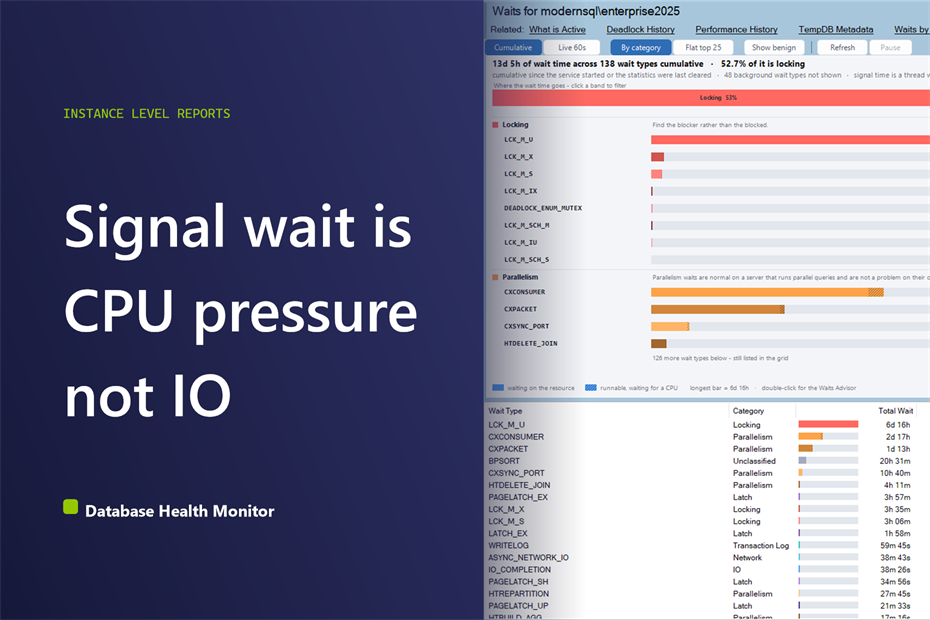
SQL Server Signal Wait Time: The Metric Everyone Skips
Learn what signal wait time means in SQL Server wait statistics, why it signals CPU pressure, and how to read it before blaming the disk.
Learn what signal wait time means in SQL Server wait statistics, why it signals CPU pressure, and how to read it before blaming the disk.
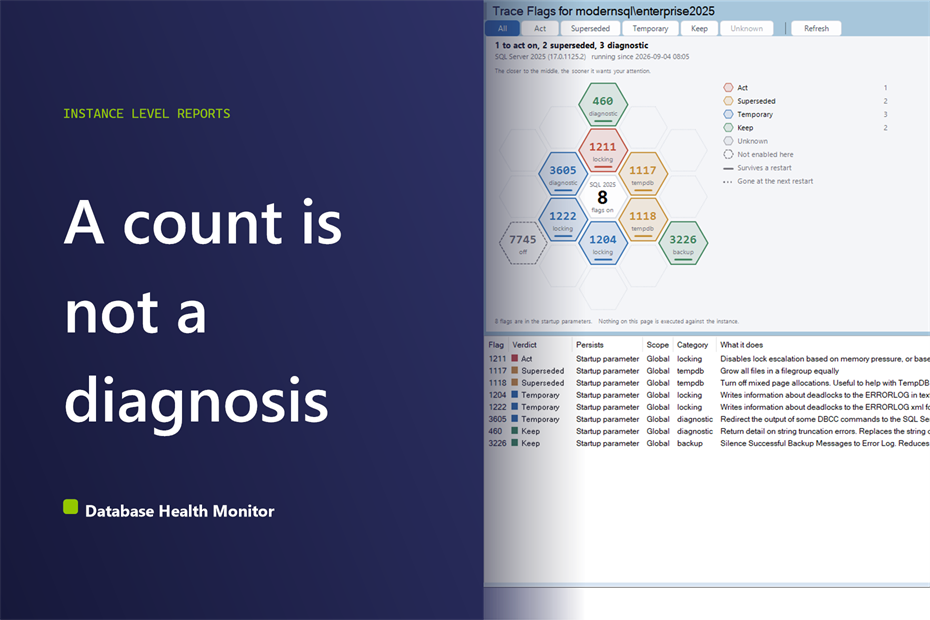
See which SQL Server trace flags on an instance are still doing anything on the current build, and which ones vanish at the next restart.
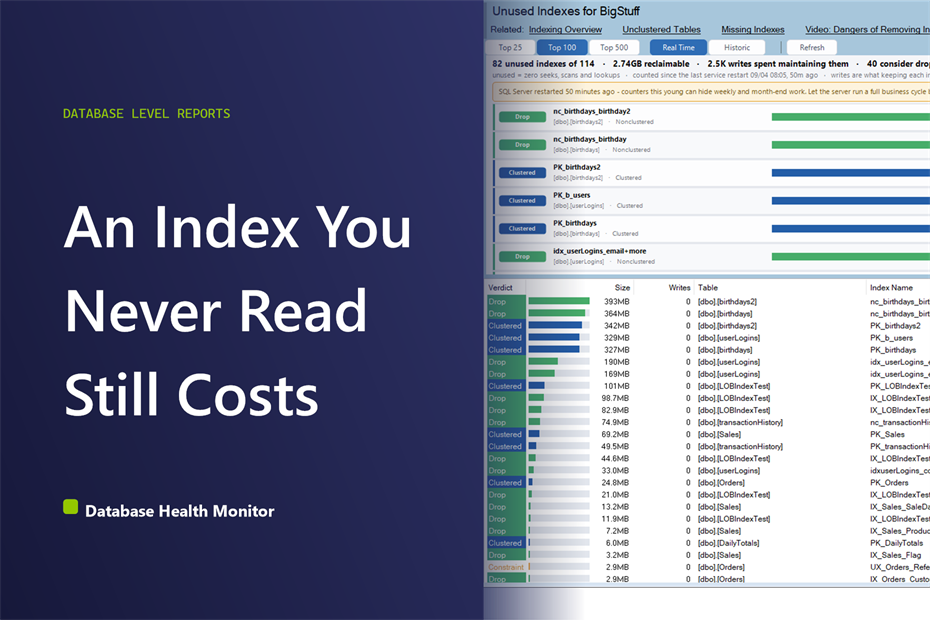
Find SQL Server unused indexes with sys.dm_db_index_usage_stats, see the write cost of keeping them, and get a verdict on every row.

When querying data in SQL Server, selecting the right join type can dramatically shape both the results and efficiency of your queries. Full Joins and Cross Joins stand out as two options that frequently lead to mix-ups, given how differently they handle data from multiple tables. A Full Join pulls every record from both tables involved, inserting NULLs wherever no match exists on the join condition. By contrast, a Cross Join creates every possible pairing of rows between the tables, …
SQL Server Full Join vs Cross Join: Key Differences Explained Read more →
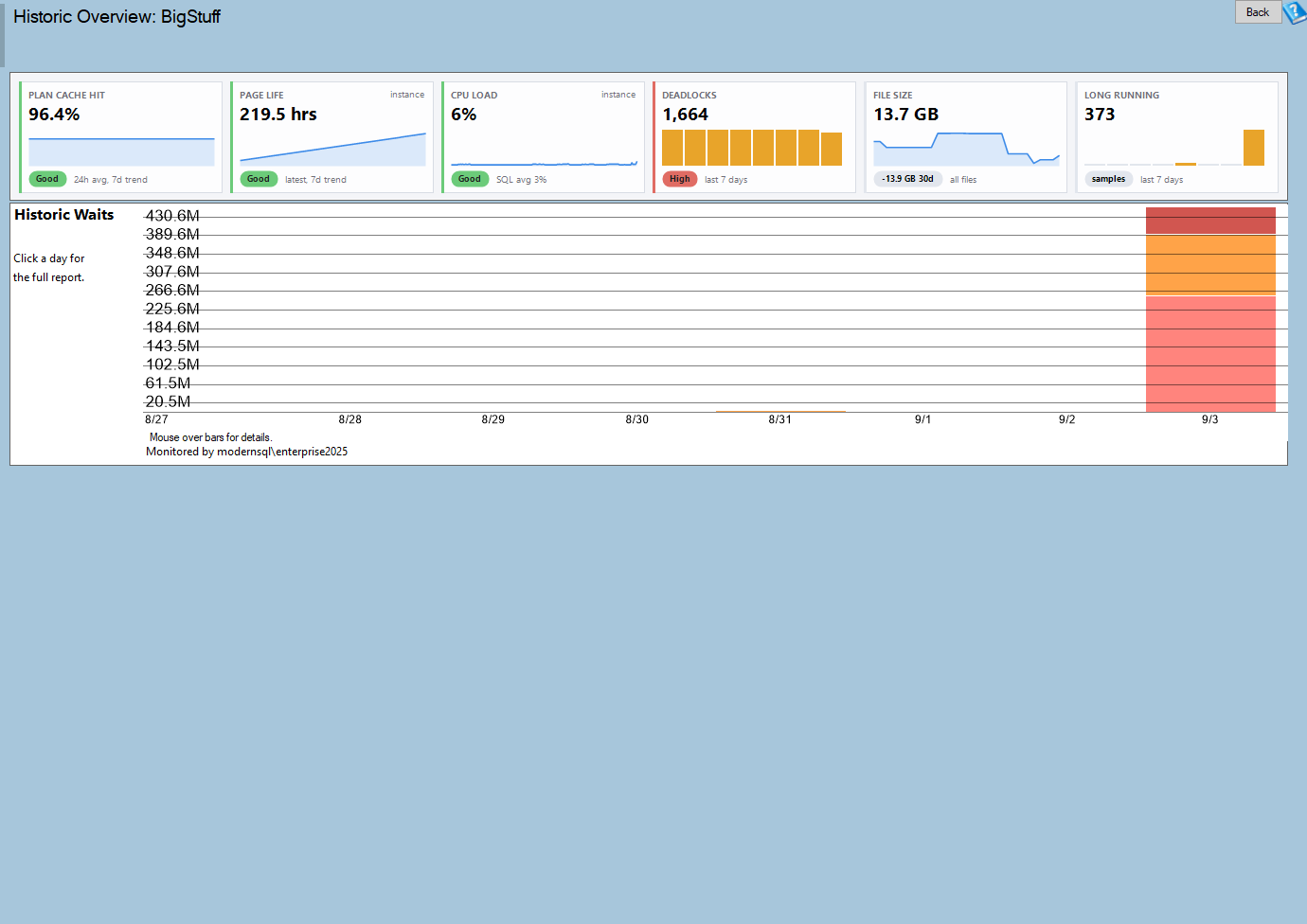
See SQL Server historic reporting in one place: plan cache hit ratio, page life expectancy, CPU, deadlocks, and file growth, trended together.

In the wise words of Benjamin Franklin, “If You Fail to Plan, You Are Planning to Fail.” This timeless adage holds particular relevance when it comes to safeguarding your SQL Server databases. A failure to adequately prepare for data loss scenarios—be it due to hardware malfunctions, data corruption, or increasingly prevalent ransomware attacks—can have devastating consequences for your business. The Common Problem: Lack of Preparedness Despite the rising risks, it’s shocking how often we encounter businesses that are inadequately prepared …
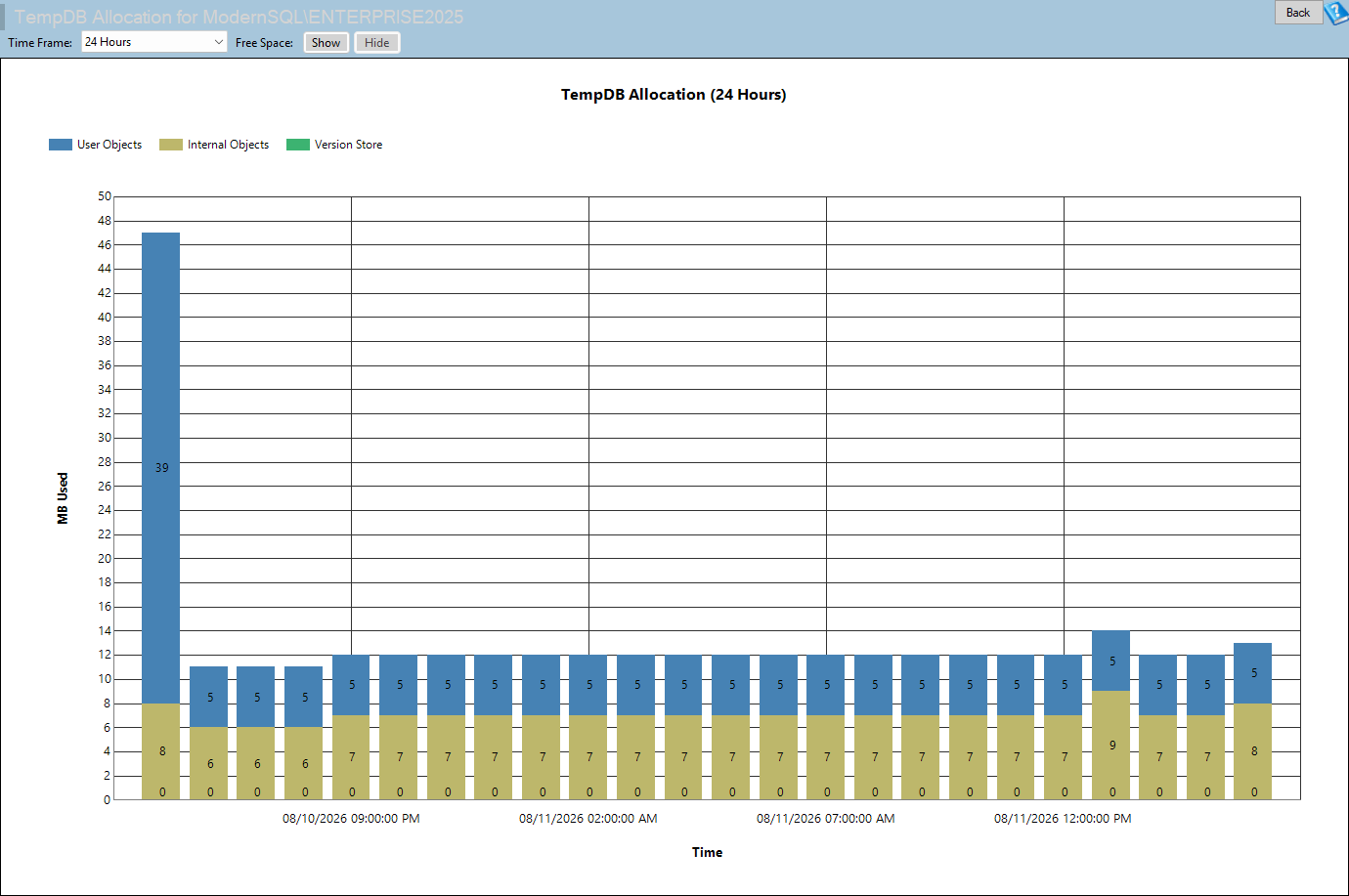
SQL Server tempdb allocation splits into three bands, so a full tempdb points to code, a bad plan, or a long transaction instead of a guess.
Take advantage of this 25% discount on my Backup and Recovery Course for SQL Server and learn how to implement a comprehensive backup and recovery strategy for your organization. Here are some reasons to check out this class. Immediate Return on Investment: By mastering backup and recovery skills, you reduce the risk of costly downtime, data loss, and business disruptions, ensuring that your investment in this training pays for itself many times over. Access to Exclusive Tools and Resources: Gain …
Why New DBAs Should Take Our Backup and Recovery Course Read more →
If you’ve spent time tuning SQL Server queries, you may have seen these two numbers side by side: logical reads and physical reads. Maybe you have seen one or the other be some absurdly high number and didn’t think much of it. But in reality they could be eye openers on behind the scenes query performance. The quick version Logical reads are pages a query can pull from the data cache — recently accessed pages stored in memory. Physical reads …

In the world of database management, maintaining optimal performance is an ongoing challenge. One crucial aspect that often gets overlooked is the management of indexes. While indexes can significantly enhance query performance, having too many of them can lead to issues when it comes to inserts, updates, and deletes. In this blog post, we’ll explore the delicate balance of index management and discuss strategies to identify and remove unnecessary indexes without compromising system stability. The Dilemma of Too Many Indexes …
We are ready to help. Steve and the team at Stedman Solutions are here to help with your SQL Server needs. Get help today by contacting Stedman Solutions through the free 30 minute consultation form.
Contact Info for
Stedman Solutions, LLC.
PO Box 3175, Ferndale WA 98248,
Phone: (360)610-7833
Our Privacy Policy